
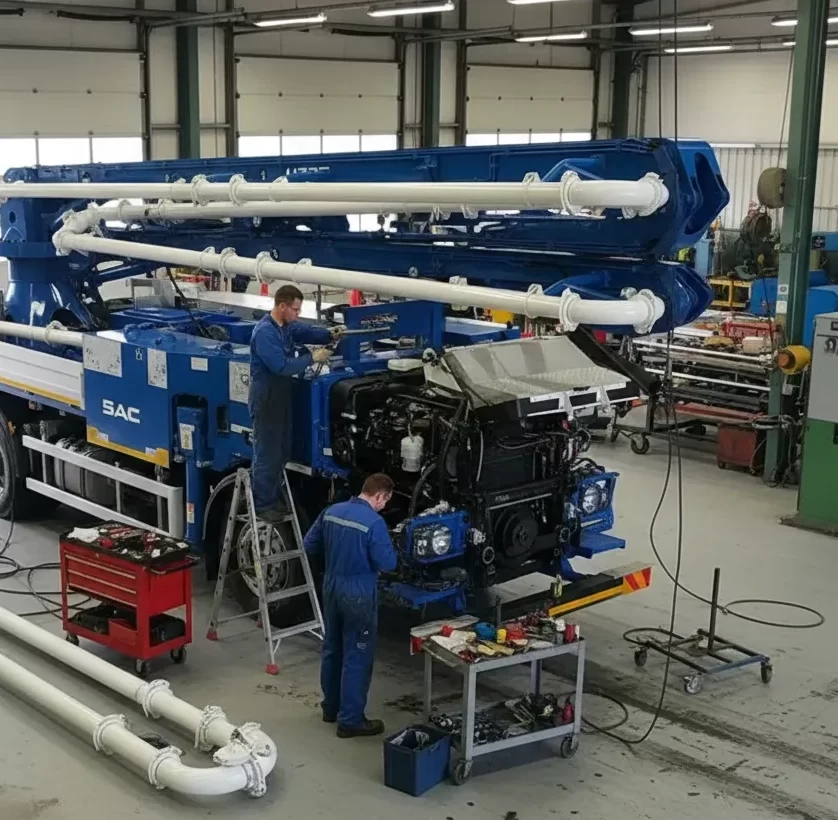
Stay prepared with Easycrete Industries’ expert emergency concrete pump repair tips for 2026. Prevent downtime and keep your concrete pumps running safely.
Concrete pump downtime can halt a pour, inflate labour and plant costs, and introduce unnecessary safety risk. Having a clear plan for emergency concrete pump repair means crews can stabilise the situation, protect people and assets, and return to productivity with minimal delay. This blog outlines the most common failure points, how to decide when professional assistance is required, and the maintenance practices that keep your fleet ready for 2026.
What Usually Goes Wrong (And When It Turns “Emergency”)
Before a job escalates, most issues present warning signs. Addressing these quickly prevents a minor stoppage from becoming a site-wide standstill.
• Line Blockages – Blockages often come from poor mixes, debris, or worn parts. If pressure builds up or the hose stiffens, stop work, release pressure safely, and clear the line carefully.
• Worn or Damaged Components – Worn parts like clamps, gaskets, and hoses can fail under pressure if not replaced in time. Cracks, leaks, or bulging hoses signal an urgent need for repair.
• Hydraulic and Electrical Faults – Hydraulic leaks, overheating, or electrical faults can disrupt safe operations and indicate deeper issues. If oil leaks or controls fail, stop work immediately and call a qualified technician.
• Boom Integrity and Set-Up Issues – Unstable ground, worn pins, or incorrect outrigger setup can compromise stability. If you notice unusual movement or noise, stop work, retract safely, and contact a qualified technician.
For detailed national safety guidance, refer to Safe Work Australia’s Guide to Managing Risk in Construction: Concrete Pumping.
When to Call the Pros for Emergency Concrete Pump Repair
Skilled crews can handle basic fixes, but some issues need professional attention. Expert technicians have the right tools, brand knowledge, and genuine parts to reduce downtime and maintain compliance.
Call experienced professionals when you encounter:
• Repeated or unexplained blockages despite the correct mix and procedure.
• Suspected structural or boom issues, including pin, bush, or weld concerns.
• Damaged clamps, elbows, reducers, or end hoses nearing failure.
• Hydraulic leaks, overheating, or unstable control systems.
• Unclear root cause after initial isolation and inspection.
Prevent the Emergency: Maintenance Moves for 2026
Regular maintenance is the best way to prevent costly delays. Follow safe-use standards, keep essential spares ready, and maintain accurate records. Working with Easycrete Industries gives you access to genuine parts and expert support for Australian conditions.
• Routine inspections aligned to safe-use standards (wear checks on elbows/reducers, clamp integrity, hose condition, pins/bushes, interlocks).
• Keep a critical-spares kit: clamps, gaskets, reducers, elbows, end-hose, gauges, lubricants/grease—matched to your fleet.
• Logbook discipline: track hours/m³, replacements, inspections; use findings to schedule proactive repairs with us.
Why Easycrete Industries Is Your Partner for Emergency Readiness
For organisations seeking certainty on busy pours, a structured plan for emergency concrete pump repair is non-negotiable. Easycrete Industries supports contractors with responsive on-site assistance, expert diagnostics, and a comprehensive range of genuine parts to keep pumps operating safely and efficiently. Whether you need fast troubleshooting, scheduled servicing, or help building a 2026-ready spares list, our team is prepared to assist.
Contact us for urgent support, book preventive maintenance, or check out our online shop to explore products that match your fleet and workload.
Related Blog Articles:
Concrete Pump Repair – Expert Technicians to Minimise Downtime
Concrete Equipment Repair Services Melbourne: Cut Downtime & Save Costs