
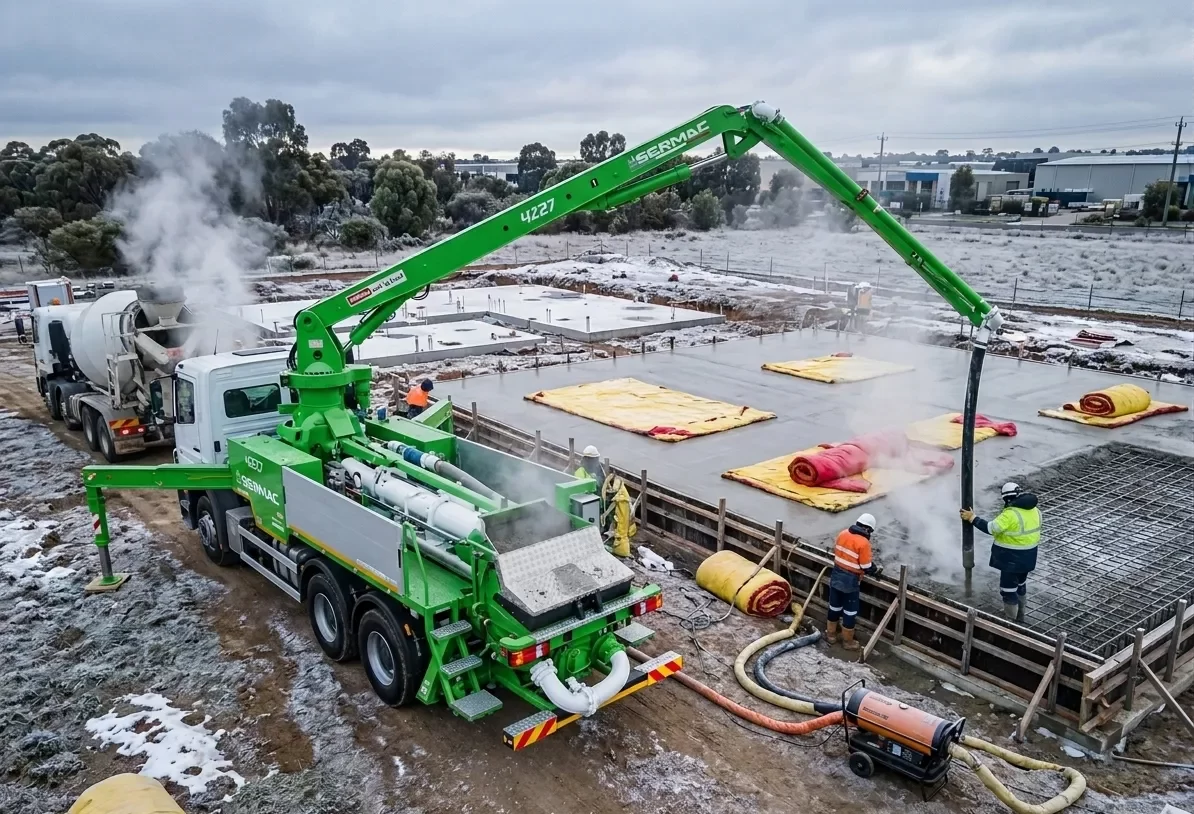
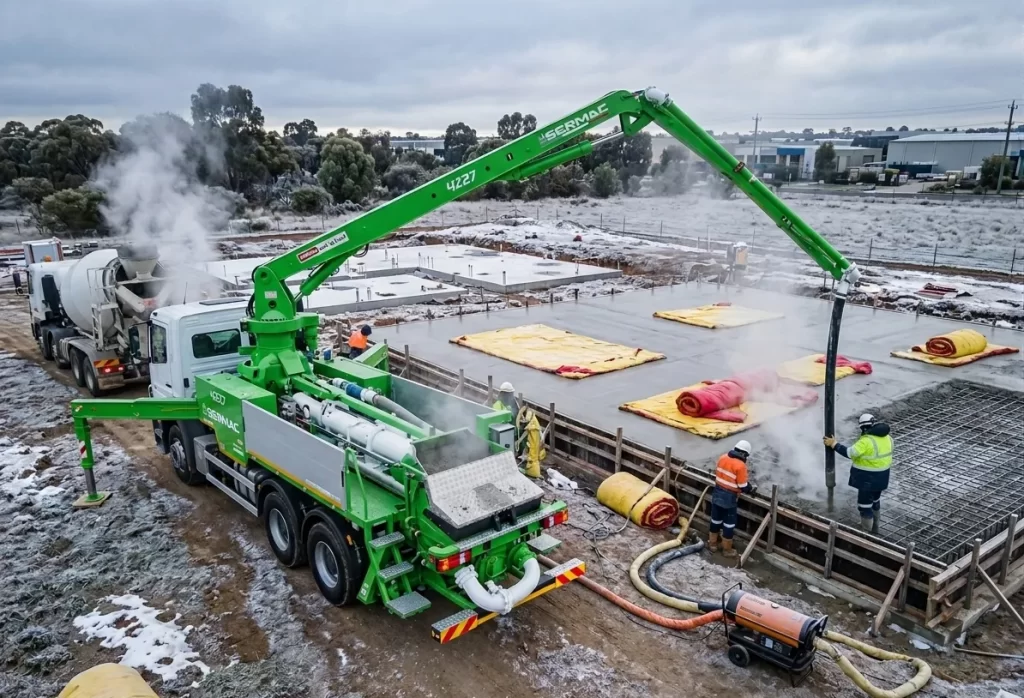
Easycrete Industries explains how winter concrete pumping impacts pressure and flow rates to maintain efficiency and performance in cold conditions.
Across many parts of Australia, winter brings colder mornings and lower daytime temperatures that can affect on-site concrete performance, particularly when temperatures fall below 10°C. For contractors and builders, winter concrete pumping requires careful planning to maintain efficiency, safety and quality standards. Cold weather not only slows curing but also changes how concrete flows through pipelines and boom systems, directly impacting pump pressure and flow rates.
Why Cold Temperatures Change Concrete Behaviour
Concrete gains strength through hydration, a chemical reaction between cement and water that is highly sensitive to temperature. When ambient and material temperatures drop, hydration slows, leading to extended setting times and delayed early strength development. Cooler conditions also make the mix stiffer and less workable, meaning it requires more energy to pump even if the slump initially meets specification.
Australian Standard AS 1379 states that concrete should typically be delivered within a temperature range of 5°C to 35°C. When temperatures are near the lower limit, additional precautions are necessary to maintain workability and performance. For project managers, this means tighter scheduling, careful monitoring of mix consistency and close coordination between the supplier and pumping contractor.
Winter Concrete Pumping: What Happens to Pressure & Flow Rates?
During winter concrete pumping, colder temperatures cause the concrete to stiffen, increasing friction inside the pipeline. As a result, pumps must operate at higher pressure to maintain consistent flow rates, especially on long line pumps or high-rise boom placements where further heat loss can occur. This makes well-maintained equipment and reliable components essential for smooth and efficient operation.
Well-maintained systems supported by the right concrete pump accessories that maximise efficiency can help reduce resistance and maintain smoother flow during colder placements.
Common impacts include:
- Increased static and operating pump pressure to maintain consistent flow
- Slower priming times at the start of the pour
- Reduced flow rates if pressure settings are not adjusted appropriately
- Higher risk of line blockages when workability drops unexpectedly
- Greater strain on equipment components under sustained high pressure
Managing Pump Performance in Cold Weather
Maintaining performance during winter requires careful planning, including scheduling pours during the warmest part of the day and adjusting mix designs or admixtures where necessary to maintain workability and early strength gain. Reducing temperature loss by insulating exposed pipelines, minimising hose lengths and properly priming lines before pumping helps ensure smoother flow and lower friction. Clear coordination between the builder, supplier and pump operator, along with monitoring delivery temperature and slump consistency, supports safer operations and more efficient project outcomes despite colder conditions.
Professional Winter Concrete Pumping Services by Easycrete Industries
At Easycrete Industries, we understand the practical challenges that winter concrete pumping presents across Australian job sites. Our experienced team is equipped to manage pressure variations, maintain steady flow rates and deliver consistent performance even in colder conditions. We combine well-maintained equipment, skilled operators and strong coordination with suppliers to ensure your project stays on track.
Planning a winter pour? Contact us to arrange reliable concrete pumping solutions tailored to your project needs.
Related Blog Articles:
How High Summer Temperatures Affect Concrete Pumping & How to Prevent Failures
Genuine Transcrete Equipment for Superior Concrete Pumping Performance